
Home/Inherited family photos
Inherited the family photos? Start with the story, not the sorting.
When a parent or grandparent dies, the photos land on one person’s floor: boxes, albums, a hard drive nobody has opened in years. The usual advice is about storage. Storage is the easy part. The hard part is that the photos arrive without their story — no names on the backs, and nobody left who can say where that kitchen was.
First, slow down
Don’t throw anything away in the first months, and don’t try to sort it all at once. Get the boxes somewhere dry and safe. Keep albums together and in their order — the order itself is information, and a pile forgets what an album remembers.
Then work in passes
- Sort loosely. By person and by era is enough. A rough order is all the next steps need.
- Digitize the keepers. Scanning prints, slides, and negatives is a hardware job. A local shop or a mail-in service does it well. Roon doesn’t digitize, and this page won’t pretend it does — our guide to digitizing old photos covers the settings that matter.
- Bring the files to Roon. Upload them directly. Rooney reads what the archive carries — dates, places, the words that came with it — and starts building chapters. A chapter is a named piece of a family’s written story.
- Name who you can. Rooney groups the same face across the photos. Your family confirms who’s who — Rooney never guesses at a stranger’s name. Every name you add makes the whole archive clearer.
Follow them in Remembering posture
A person who has died can be followed in Roon in Remembering posture. Their storyline is told from what they left behind: their photos, their voice notes, the words other people kept. Rooney writes their chapters and follows their threads — a thread is the same person, place, or thing gathered across the years — the same garden across thirty years, the same table every Christmas. Your family can add what they remember to the same story. Rooney invents nothing. What nobody can answer stays honestly blank.
You don’t have to keep every print
Once a photo is digitized and shared, the print has done its job. Keep the strongest originals — the ones you’d rescue first. Let the duplicates and the blur go without guilt. And because copies cost nothing, every sibling and cousin can hold the whole archive instead of a divided share of it. That’s the passing-down side of this work.
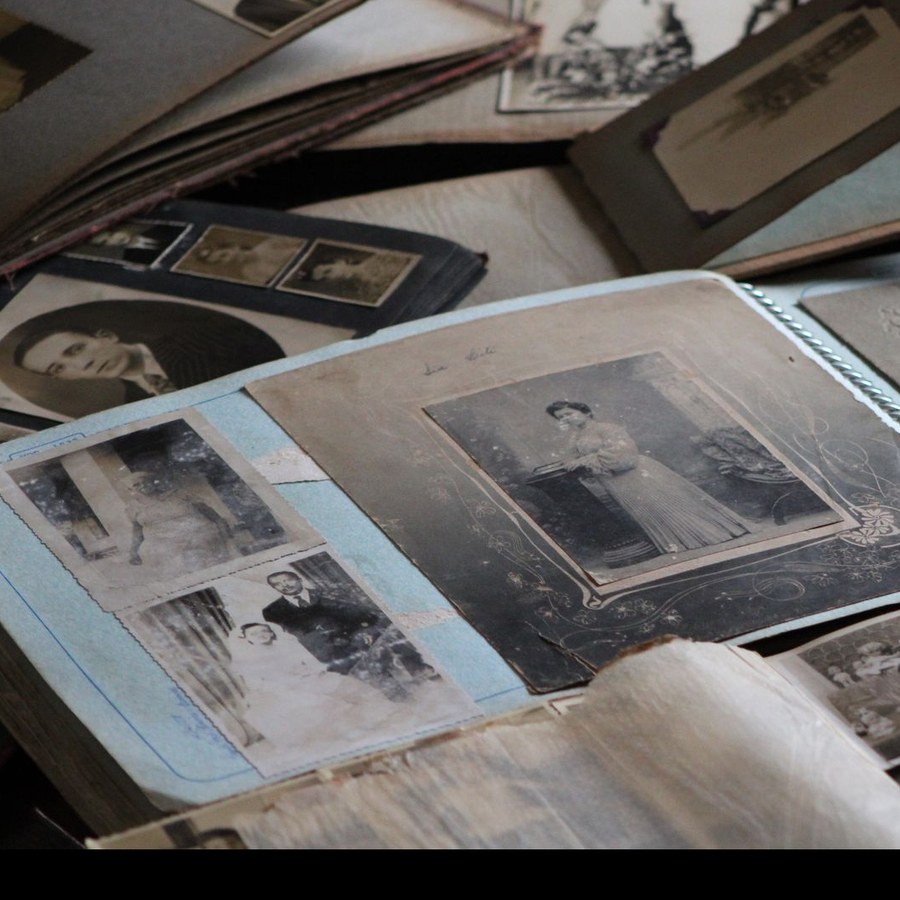
The boxes are the burden. The story is the inheritance.
who this is for
For the one the boxes landed on.
Every family has this person. If it’s you, begin with one box, not the whole estate. And when you’re ready to think about your own photos, the other side of this is what happens to your photos when you die — an afternoon of setup that spares your family this exact job.
plain answers
Questions, answered straight.
What should I do first with inherited family photos?
Nothing irreversible. Get them somewhere dry, keep albums in their order, and leave the culling for later. When you’re ready: sort loosely by person and era, digitize the keepers, and bring the files somewhere they’ll be read, not just stored.
Can Roon digitize my inherited prints and slides?
No. Digitizing is a scanning job, and shops and mail-in services do it with the right hardware. Roon starts where they finish: once you have the files, Rooney turns them into chapters and threads. Our digitizing guide covers what to ask a scanning service for.
What if I don’t know who is in the photos?
That’s normal, and it isn’t a dead end. Rooney groups the same face across photos and builds chapters from dates and places. Your family names who they can — an aunt often knows faces you don’t. Unnamed people stay unnamed until someone knows; Rooney never invents an identity.
Do I have to keep all the original prints?
No. Once a print is digitized and the file is shared with the family, keeping every original is a choice, not a duty. Most families keep the strongest originals and let the rest go. The story is what’s being inherited — the paper was only ever its container.
What is Remembering posture?
It’s how Roon follows a person who has died. Their storyline is told from what they left behind — their photos, their voice, their words — instead of expecting new moments, and the family adds memories to it. Rooney writes their chapters and follows their threads across the years they lived.
Can my siblings and cousins see them too?
Yes. The story in Roon is shared privately with exactly the family you choose — never public. And since export is free on every plan, each person can also hold a complete copy of the archive itself.
We're building this with a small group of families first.
Roon isn't open to everyone yet. We're letting in a limited first group — people who'll help shape it, get in at founding pricing, and keep that price for as long as they stay. Add your email and we'll be in touch as spots open.
You're on the list.
We'll email you the moment a spot opens. Thank you for wanting this to exist.